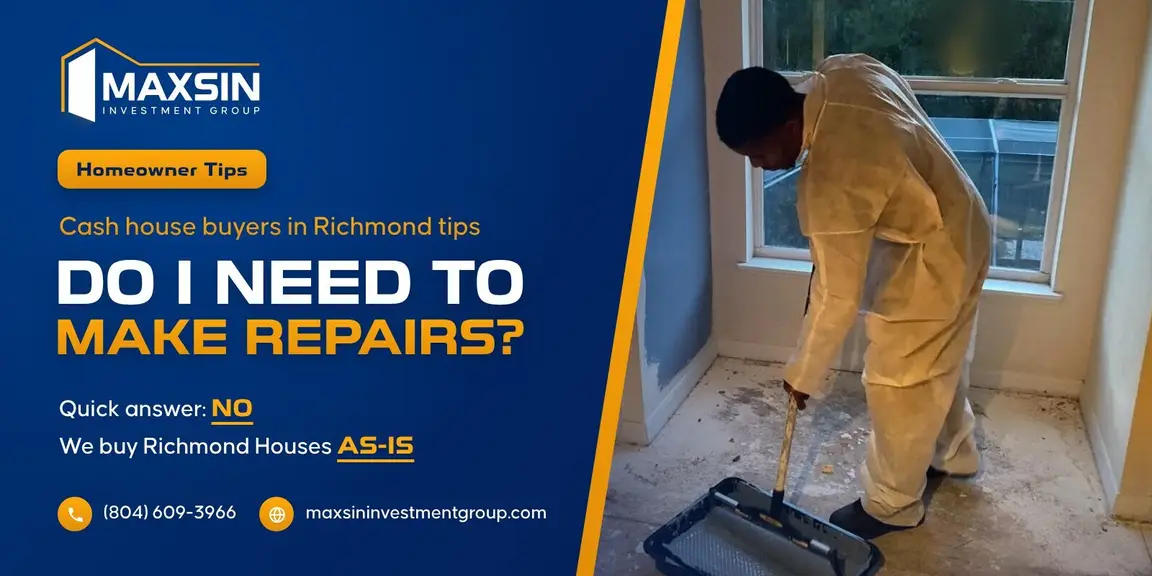

Picture a 1950s brick rancher in Henrico that you inherited from your mother. Nobody has updated it in years. The roof is near the end of its life, and the kitchen still has the cabinets from 1978. Now you’re trying to decide whether to renovate it, list it with an agent or sell it as-is. In Virginia, homeowners generally aren’t required to make repairs before selling. You still have disclosure duties, and a buyer’s loan or contract can bring some repairs into play. But what you fix is mostly a money decision, and that’s good news if you’re selling a house that needs work in Richmond.
Why Is It So Hard to Know What to Fix Before You Sell?
Because everyone around you has a different stake in the answer. A contractor sees a job. A neighbor remembers what their house sold for after a remodel. An agent wants the listing photos to look good. None of them are wrong, but none of them are paying for the repairs.
Most sellers hear some version of “you have to fix it up to sell it.” That’s half right. You have to fix it up to sell it to certain buyers, at a certain price, on a certain timeline. Change any one of those and the answer changes.
Here’s the honest version. Some repairs pay you back, some barely cover their cost, and some lose money. The trick is knowing which is which before you write the first check.
Start with a written list of what’s actually wrong, ranked from “could stop a sale” to “buyers won’t care.” Get two written estimates for anything big before you decide. Numbers on paper make this decision a lot calmer than guesses at the kitchen table.
If you’re weighing the whole picture, see how it works when you sell to us. It shows the as-is side of the math next to a fix-up plan.
What Does Virginia Law Say About Selling a House That Needs Repairs?
Virginia is what people call a “buyer beware” state. Under Virginia Code § 55.1-703, the seller gives the buyer the Real Estate Board’s residential property disclosure statement. That form says the owner makes no representations or warranties about the condition of the house. It tells buyers to do their own homework, like a home inspection, before closing.
In plain words, homeowners generally aren’t required to make repairs before selling. You can sell a house as-is, whether it needs cosmetic updates or major repairs. You still have to follow the disclosure rules, though. Some issues may also need to be fixed depending on the buyer’s financing and the terms of your contract.
That isn’t permission to hide a problem you know about. Covering up a known defect can still land you in a dispute after closing. If you know about a serious problem, the safest move is to put it on the table. Selling as-is also doesn’t stop a buyer from asking for repairs. A Virginia real estate attorney can tell you exactly where the line is for your house.
Older homes have one more rule. If your house was built before 1978, a federal rule applies, enforced by the EPA. You must tell buyers about any lead-based paint you know of and hand over any reports you have. You also give them a federal lead pamphlet, and buyers get a 10-day window to test for lead unless they waive it in writing. You don’t have to test for lead or remove it.
Plenty of homes in the Fan, Church Hill and established Henrico neighborhoods were built before 1978, though not every house there was. Being in that group doesn’t mean your house has lead-based paint. It means the disclosure paperwork applies, so plan on it.
Which Repairs Actually Pay Off When You Sell?
The best data we have on this comes from the yearly Cost vs. Value report. The 2025 report, released in September 2025, found that a new garage door recouped about 268 percent of its cost at resale nationally. A new steel entry door recouped about 216 percent. A minor kitchen refresh, meaning new cabinet fronts, counters and appliances without moving walls, came back at about 113 percent.
The big jobs tell a different story. In the report’s South Atlantic region, which includes Virginia, a midrange major kitchen remodel recouped only about half its cost. A new asphalt roof came back at roughly two-thirds to 70 percent.
Small and visible beats big and expensive. Paint, a clean front door, working lights and a fresh garage door show up in every listing photo. A full kitchen remodel often doesn’t pay for itself before you hand over the keys.
The Richmond market matters too. In September 2026, the median Richmond home sold for $401,199 after a median of 17 days on the market, according to Redfin’s Richmond market data. That same month, 40.4 percent of Richmond homes sold above list price. When buyers are competing like that, they often look past dated finishes. They won’t look past a roof that leaks.
One thing I always tell homeowners is, don’t go spending $30,000 fixing up a house before you know if you’re going to get that money back. Sometimes a few small improvements make sense, and sometimes you’re better off selling it the way it is. The return on any repair depends on the house, the neighborhood and the market.
What Repairs Will Buyers and Lenders Ask For?
Even if the law doesn’t make you fix anything, the buyer’s side can ask. Not every Virginia purchase contract includes a home inspection period. Whether there is one depends on what you and the buyer agree to. When there is, the buyer can ask you to make repairs, give a credit at closing or lower the price. You can say yes, no or meet in the middle.
When we evaluate a house, the concerns that come up most are an aging or leaking roof, outdated electrical, plumbing problems, and heating and air systems. Crawl space moisture, foundation concerns, water damage, possible mold and major structural repairs are on that list too. That list comes from the houses we walk through, not a statewide study. Cosmetic things like worn carpet rarely make a buyer walk.
Some sellers get their own inspection before they list. It costs money up front, but it shows you the problems before a buyer finds them. You can then fix the few that matter, price around the rest, and avoid a surprise renegotiation a week before closing.
Buyers using FHA or VA financing may face extra property-condition requirements. An appraiser checks whether the house meets that program’s minimum standards. Certain safety, structural or health-related problems may need to be fixed before the loan can close. An appraisal isn’t the same as a full home inspection, though. It’s a check for the lender, not a system-by-system review for the buyer. That can surprise a seller who agreed to a price without knowing the buyer’s loan type.
Have you asked your agent which kind of loan most buyers in your price range are using? That one answer tells you a lot about which repairs will come up.
The repairs that matter most are the ones that could stop a loan. Everything else is a negotiation.
Should You Fix Up Your House or Sell It As-Is in Richmond, VA?
You have more than one way to sell a house that needs work, and you don’t have to choose between draining your savings and staying stuck. The biggest thing to know is that you have options. The right one depends on what you’re trying to accomplish.
Before you pick a path, be honest with yourself about money and time. How much cash can you spend without borrowing? How many months can you keep paying the mortgage, taxes, insurance and utilities on a house you’re trying to sell? And how much of the work can you actually manage, especially if you live out of town? Those answers usually point to the right option.
The first option is to fix it up, then list it. If you have the cash, the time and mostly small repairs, this can bring the highest price. It also means paying for the work up front and carrying the house while it’s done.
The second is to list the house as-is with an agent and price it for its condition. If you have a few months and the house still shows reasonably well, this can bring more than a cash sale. You can also offer a credit at closing. That takes a set amount off what the buyer pays, so the buyer handles the repairs after they own the house.
The third is to sell your house as-is in Richmond to a cash buyer. When we evaluate a house, we look at the overall condition and what it could realistically cost to make the needed repairs. Sometimes that’s $10,000 worth of work, and sometimes it’s a lot more.
An investor’s offer also accounts for holding costs, resale expenses and risk. That’s why a cash offer is usually lower than what a fully renovated house might sell for on the open market. What you get in return is convenience, fewer repairs on your end and potentially a faster closing. Not every house qualifies, and the timeline and costs depend on the sale.
Some homeowners ask about other setups, like a novation agreement. In plain words, a company may handle repairs and marketing while the house sells on the open market, with the terms spelled out in writing. It isn’t right for every house or every homeowner, so have a Virginia real estate attorney read it before you sign. At Maxsin, we look at these options too, including whether a traditional listing makes more sense.
At the end of the day, I want homeowners to understand all their options. Sometimes selling to an investor makes sense, and sometimes listing with an agent is the better move. Even though we buy houses ourselves, I’m going to be upfront about that.
If your house sits just outside the city, see how we buy houses in Henrico, VA, and what selling as-is looks like there.
Do You Need to Make Repairs Before Selling a House in Richmond?
No, in most cases you don’t, but the repairs you skip will show up in the price. Virginia’s disclosure rules put the inspection on the buyer, so the law generally won’t stop you from selling a house that needs work. The market decides how much that work costs you.
If you have time and a little cash, the small, visible fixes are usually worth it. Fix anything that could stop a buyer’s loan, like a leaking roof or a dangerous electrical problem, if you’re listing with an agent. Skip the big remodel unless the numbers clearly work.
If you don’t have the time or the money, sell it as it is. Either as-is with an agent or to a cash buyer, the house can still sell. The best plan is the one you can actually pay for and finish.
Frequently Asked Questions
Can I Sell My House Even If It Needs Repairs?
Yes. Virginia homeowners generally aren’t required to make repairs before selling, though you still have to follow the disclosure rules. You can list it as-is with an agent, offer the buyer a credit at closing, or sell to a cash buyer. The repairs it needs will affect the price and the type of buyer, not whether it can sell.
Is It Better to Sell a House As-Is or Fix It Up?
It depends on your time, your cash and the size of the repairs. Small, visible fixes like paint, a front door or a garage door often pay back more than they cost. Big remodels usually don’t. If the repairs are large or you need to sell soon, selling as-is often makes more sense.
What Repairs Are Required Before Selling a House in Virginia?
In most cases, none are required by state law. The buyer’s loan or contract can bring some into play, though. FHA and VA loans have minimum property standards, so certain safety, structural or health-related problems may need to be fixed before the loan closes.
Do I Have to Tell Buyers About Problems With My House in Virginia?
Virginia uses a “buyer beware” disclosure form, so you don’t have to list every flaw. But you shouldn’t hide a problem you know about, and homes built before 1978 have a federal lead paint disclosure. A Virginia real estate attorney can tell you what applies to your house.
Do Cash Buyers Pay Less for Houses That Need Work?
Usually, yes. An investor accounts for repairs, holding costs, resale expenses and the risk of surprises behind the walls, and that shows up in the offer. What you get in return is convenience, fewer repairs on your end and potentially a faster closing. The exact terms depend on the house.
Where That Leaves You
You don’t have to fix everything before you sell, and Virginia law generally won’t make you. Fix the small things buyers see, take care of anything that could stop a loan if you’re listing, and skip the big remodel unless the math clearly works.
If you’d like a second set of eyes on your repair list, reach out to us at (804) 609-3966. If fixing it up and listing makes more sense, I’ll tell you that plainly. No pressure, no obligation.
Helpful Virginia Blog Articles
Can You Sell a House in Foreclosure in Virginia Before Auction
Can You Sell a House With Back Taxes in Richmond, VA
Can You Still Appeal Your Richmond Real Estate Assessment?